
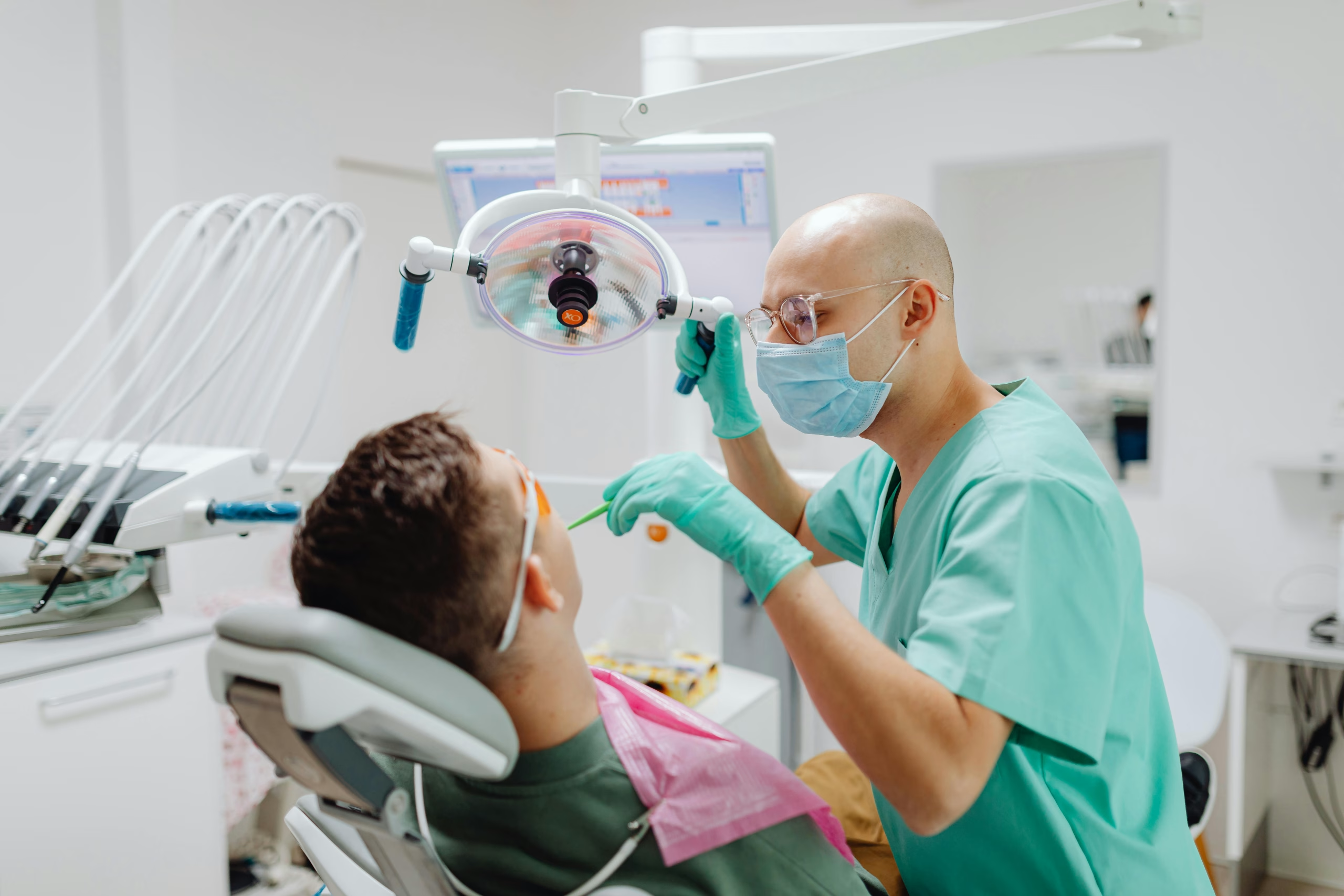
Training dental surgeons in oral implantology goes far beyond learning a technical skill. It’s a demanding course, combining scientific rigor, surgical mastery and a global vision of treatment.
Skylab, a dedicated venue for surgical and medical training coursesrecently hosted a Level 1 course from the ITI(Institut Team of Implantology).
A behind-the-scenes look at training and its challenges, with Vincent Debrumetz, ITI Development Manager.
Oral implantology
This discipline requires a perfect understanding of :

- anatomy,
- bone biology,
- implant-supported prosthesis,
- and surgical planning.
“Faced with increasingly well-informed and demanding patients, practitioners must continually update their skills.This is why structured and accredited training programs are so important.”
ITI Training Programs: A Curriculum Focused on Practical Application and Real-World Needs
Vincent Debrumetz explains: “The goal is to support practitioners and dentists as they advance their practices in various areas: implantology, implant-supported prosthetics, digital dentistry, and orthodontics.”
Implantology involves replacing one or more missing teeth by inserting implants into the maxillary or mandibular bone. Implants restore masticatory function, improve aesthetics and preserve bone by providing mechanical stimulation.
Digital planning in implantology is a key to success. It relies on the use of 3D scanners, surgical simulation software and 3D-printed surgical guides. This makes it possible to determine optimal implant placement, anticipate anatomical constraints and minimize surgical risks, while optimizing the prosthetic result.
Orthodontics also plays a complementary role in implant treatment. Prior to implant placement, it may be necessary to realign adjacent teeth to create sufficient space or improve occlusion. The integration of orthodontics and implantology ensures a comprehensive and harmonious approach to the smile.
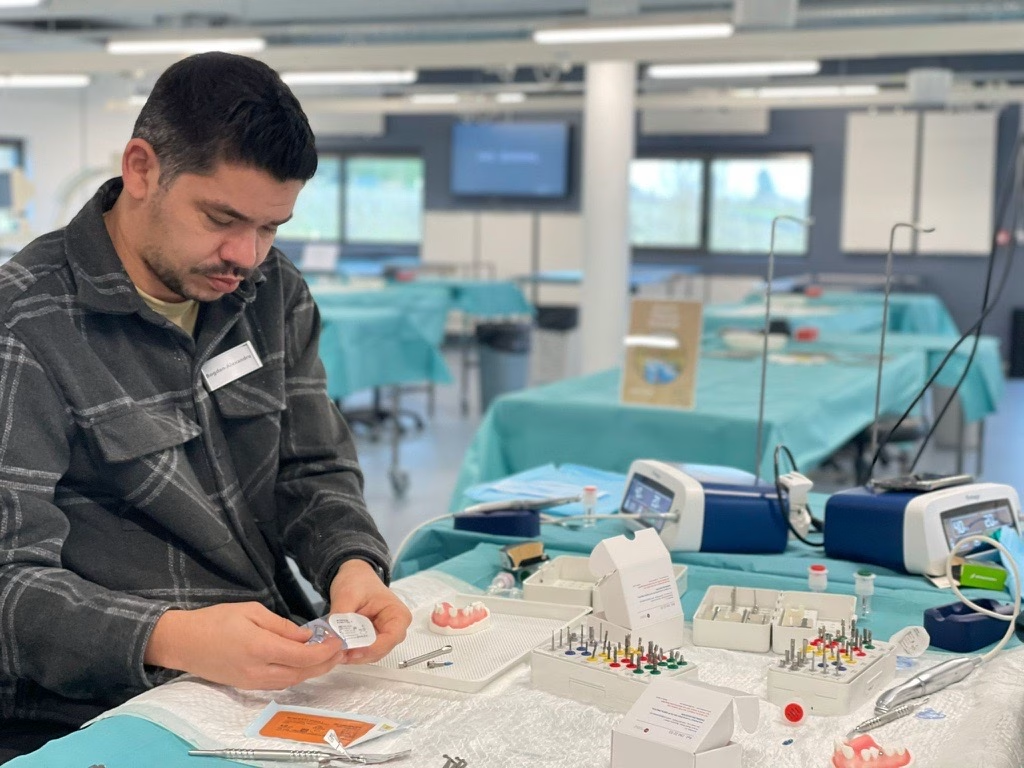
One of the cornerstones of ITI training is listening to practitioners. “At the start of the first session, we go around to the practitioners to take note of their expectations. During the final session, we refer back to these notes to ask them if we’re on the right track and if we’ve met their expectations.”
Starting with the first session, each participant’s expectations are identified, formalized, and reassessed throughout the program.
“At Skylab, we recently hosted an ITI Level 1 session, offering practitioners the opportunity to place implants: artificial roots placed at bone level, which will provide a solid anchor for positioning an abutment and then a prosthesis,” explains Vincent Debrumetz.
“The ITI offers several training levels, from Level 1 to Level 3. The final level represents the highest level of training and is intended for experienced surgeons and prosthodontists. The curriculum alternates between theoretical instruction, supervised practical exercises, and live surgical procedures to ensure predictable and reproducible techniques.“
The various levels of training in implantology cover implant placement, sinus lift, bone reconstruction, zygomatic implant placement, management of complex edentulous situations, etc.
These training courses require an impeccable technical environment, close to real operating room conditions.
Scientific excellence at the service of clinical practice
Dental implantology training courses are part of a dynamic of continuous progress, essential to the evolution of oral implantology practices. By offering a structured course, from Level 1 to the most advanced levels, they enable practitioners to develop their skills in a progressive, secure and scientifically supervised way.
That is why some courses combine implant placement with prosthetics. “To place an implant, you first need to understand the prosthesis. You need to have a basic understanding of how to properly position a tooth, a crown, an abutment—everything.”
In addition to technical training, the training organization’s approach is based on a global vision of implant treatment, integrating prosthetic planning, clinical reflection and field experience. This pedagogical approach guarantees more predictable practices and better patient care.
The combination of implantology, prosthetics, digital planning and orthodontics illustrates the importance of an integrated approach in modern dentistry. It enables us to offer personalized, predictable and long-lasting treatments that meet patients’ aesthetic and functional expectations.
At a time when implantology occupies a central place in modern dentistry, ITI training courses are a real lever for professionalization, providing practitioners with the tools they need to meet the clinical challenges of today and tomorrow.