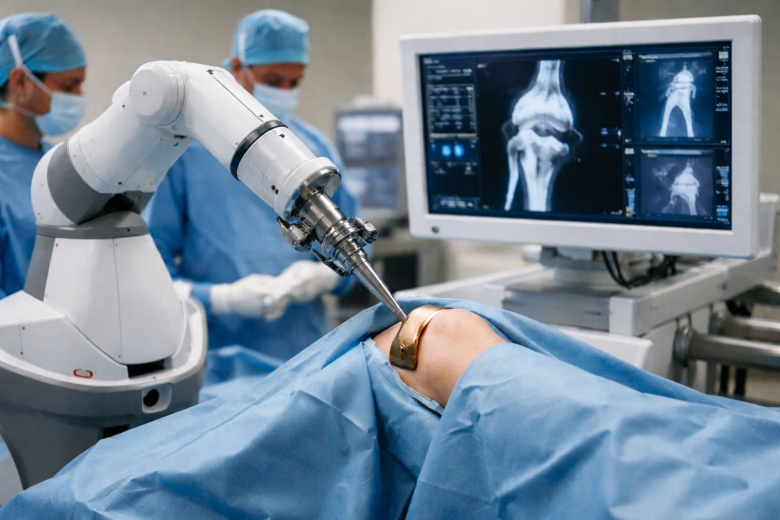
Long reserved for hospital departments and specialized practices, ultrasound is now becoming widely accessible. Thanks to technological advances and the miniaturization of equipment, this medical imaging tool is now used by a growing number of healthcare professionals: general practitioners, sports medicine physicians, physical therapists, emergency physicians, anesthesiologists, and radiologists.
But while these devices are becoming more accessible, using them requires specific skills. That is why training in ultrasound and interventional medicine has now become a major priority in the evolution of medical practices.
Interventional Ultrasound: When Imaging Guides Medical Procedures
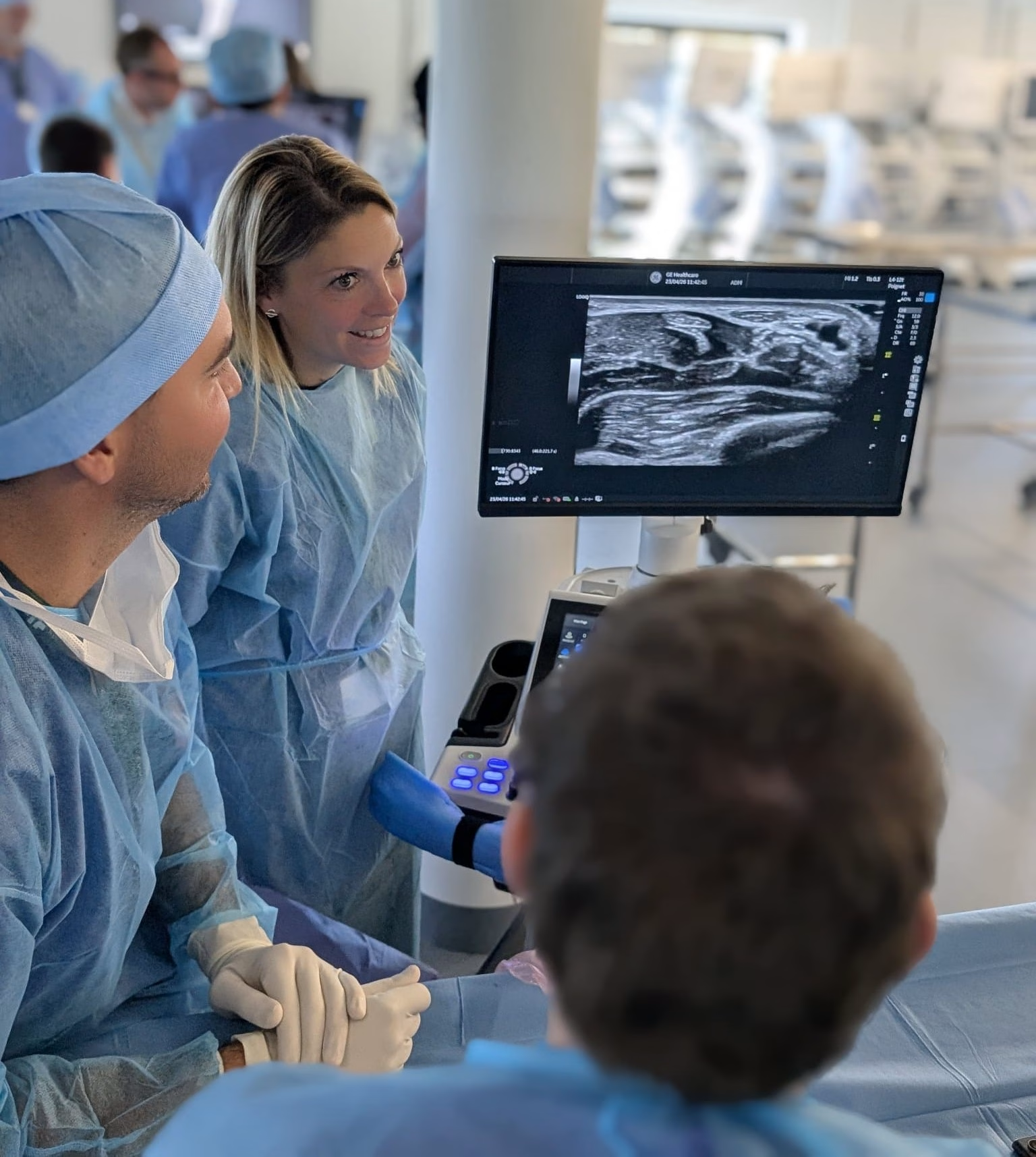
Changes in medical practices are not limited to diagnosis. Today, ultrasound also plays a central role in the performance of many therapeutic procedures.
This is known asinterventional ultrasound, a discipline that involves using real-time imaging to precisely guide a medical procedure.
Among the most common applications are ultrasound-guided injections, which are widely used in sports medicine, rheumatology, physical medicine and rehabilitation, and interventional radiology.
Using ultrasound, the practitioner can view anatomical structures—tendons, muscles, joints, bursae, or nerves—in real time and thus guide the needle with millimeter-level precision.
This approach has several advantages:
- greater precision in movement;
- a reduction in injection-related risks;
- greater patient comfort;
- a minimally invasive surgical approach with fewer complications;
- Optimized therapeutic efficacy through precise targeting of the treatment area.
Injections into the shoulder, knee, or hip, as well as treatments for certain tendinopathies, are now frequently performed under ultrasound guidance.
In addition to injections, interventional ultrasound is also used for:
- Punctures
- Carpal Tunnel Release
- A section of the flexor pulley for the treatment of trigger finger
- Treatment of Compartment Syndromes
- A cross-section of Lacertus fibrosus
- Decompression of the ulnar and radial nerves
- Treatment of Epicondylitis
- …
A skill that is increasingly in demand in educational programs
In light of this trend, ultrasound training programs are no longer limited to teaching diagnostic skills.
Many healthcare professionals are now seeking to manage the entire care continuum, from the identification of a condition to the performance of ultrasound-guided procedures.
This skills development focuses in particular on:
- sports medicine doctors;
- general practitioners who perform technical procedures;
- rheumatologists;
- anesthesiologists;
- radiologists;
- orthopedic surgeons;
- as well as certain professionals involved in the treatment of musculoskeletal conditions.
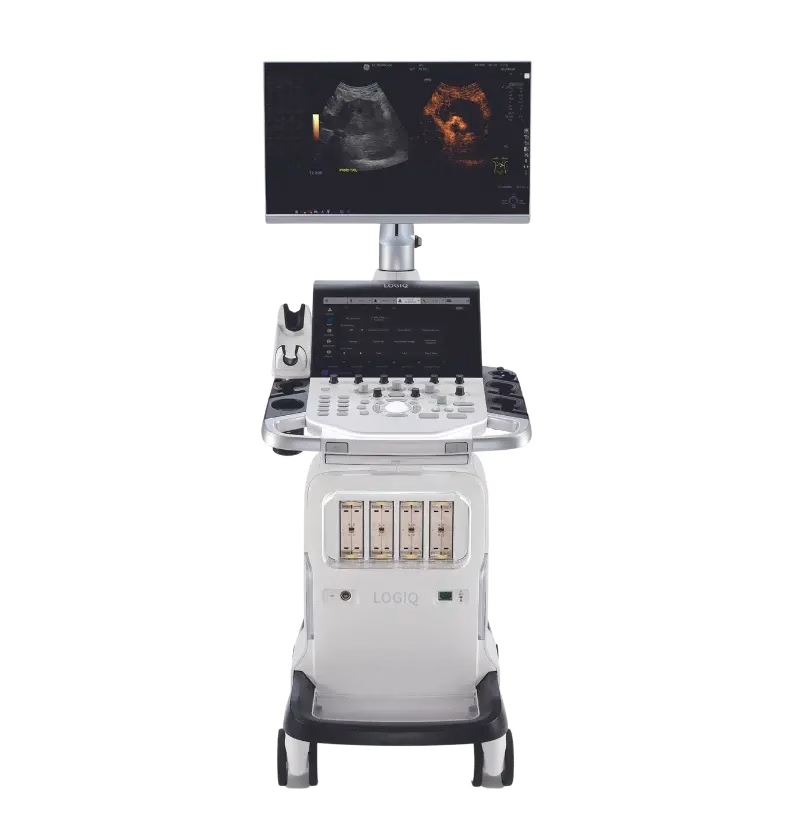
Modern training programs are thus increasingly incorporating hands-on workshops focused on ultrasound-guided procedures, allowing participants to develop the reflexes and precision needed to perform these procedures safely.
POCUS: A Revolution in Clinical Examination
Ultrasound has become much more than just a supplementary imaging test. Used directly at the patient’s bedside or during a clinic visit, it provides immediate information and helps guide clinical decision-making.
Point-of-Care Ultrasound, better known by the acronym POCUS, refers to the targeted use of ultrasound directly at the point of care.
This ability to visualize certain anatomical structures in real time is profoundly transforming the diagnostic approach. Healthcare professionals are no longer limited to clinical observation: they can supplement their examination with an instant visual assessment.
In many situations, this approach saves valuable time and helps guide the care pathway more quickly.
Muscle and Joint Ultrasound: A Tool That Has Become Essential in Sports Medicine
In the field of sports medicine, ultrasound has become indispensable.
In particular, it makes it possible to evaluate:
- muscle injuries;
- tendinopathies;
- ligament injuries;
- joint disorders;
- nerve compression;
- monitoring the healing process.
Dynamic imaging offers a significant advantage: it allows us to observe structures in motion and immediately correlate the images with the patient’s symptoms.
This responsiveness is particularly valued in the monitoring of athletes, whether they are amateurs or professionals.
Initial or Continuing Education at Skylab
With its spaces dedicated to medical training, its imaging equipment, and its facilities tailored to clinical practice, Skylab is ideally suited for hosting sessions focused on standard ultrasound or interventional medicine and surgery.
Are you interested in organizing a training course in interventional medicine or developing a program focused on ultrasound? Contact the Skylab team to design a format tailored to your educational goals.
Skylab’s Partners in Surgery and Interventional Medicine


Training Schedule
Check out the schedule of training sessions held at Skylab or organized by Skylab!